


From scattered documents to a firm grip on GDPR compliance


By Privacy Company and Privacy Nexus
Scenario one: working with separate documents
You open your record of processing activities in Excel. You look for the process that most closely resembles the new service. You copy a row and modify it. You open a Word document for the pre-DPIA assessment. You send an email to the supplier to ask whether a data processing agreement is already in place. You search your inbox for the latest version of the privacy policy. Somewhere along the way, you lose track of which version of which document is the most up to date. Six weeks later, the service is launched. The documentation is largely in order, but to be honest, you're not one hundred percent sure that everything is correct. If management asks questions at a later stage, you'll not only spend more time finding the answers, but you also risk important information being missing or out of date.
Scenario two: privacy management with Privacy Nexus
You open Privacy Nexus. Together with the process owner, you register the new processing activity. They answer the questions about the process themselves, without you having to guide them through every detail. Because the record of processing activities is up to date, you immediately see which existing processing activities are related to the new service. Privacy Nexus indicates that a DPIA is recommended and launches it directly within the same application.
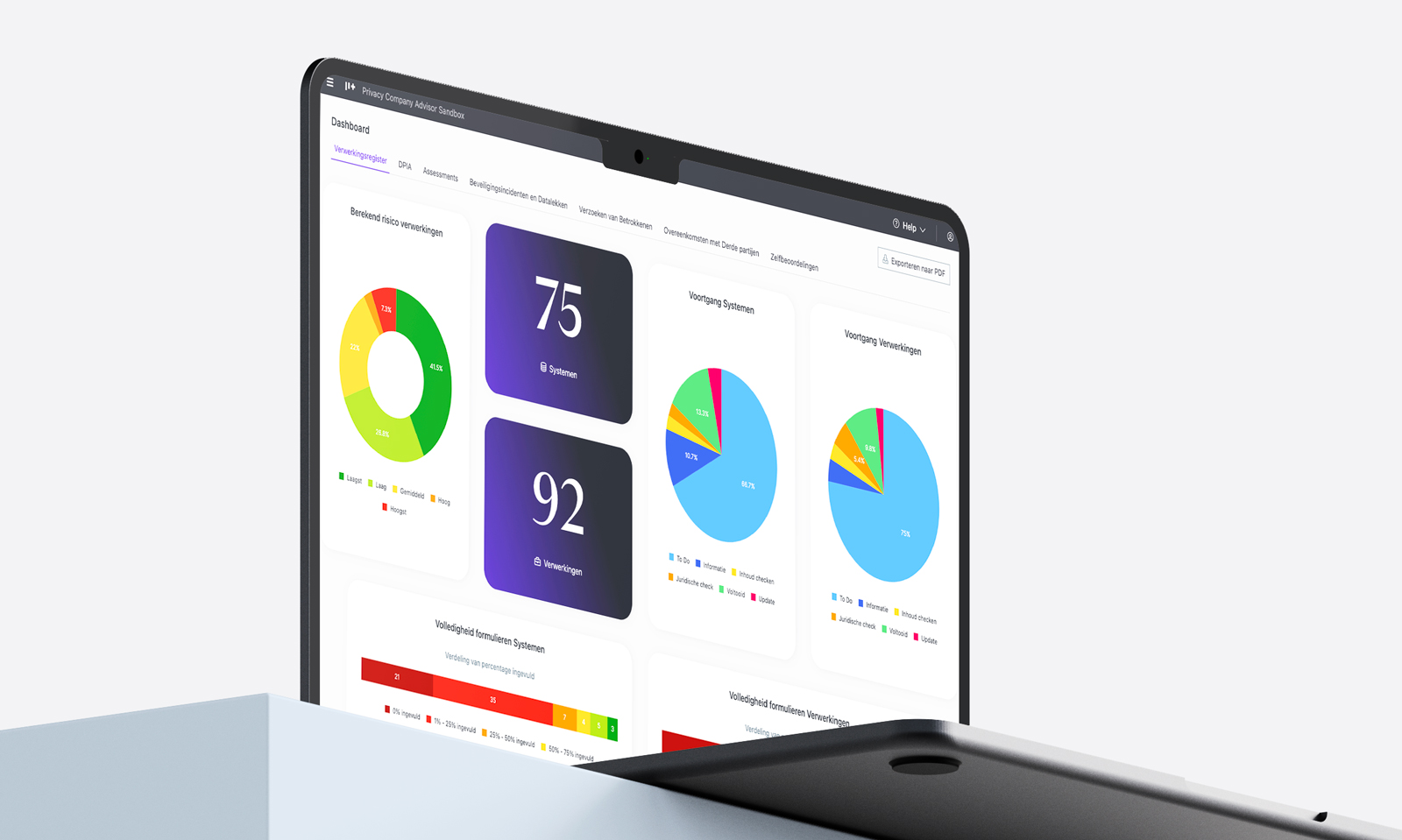
The supplier managing the new app is already registered in the system as a processor; you can see that the data processing agreement is already in place and where to find it. All you need to do is add an addendum covering the new service. You update the privacy policy based on the registered processing activity. Six weeks later, the service is launched. You know what has been documented, why it’s there, and who contributed what. When management asks for an update, you can confidently open the Privacy Nexus dashboard.
Which privacy officer are you?
The different scenarios determine not only how you work, but also how you are perceived within the organisation. Having a clear overview and the right insights not only leads to better privacy decisions, but also causes greater confidence in your role. The product manager has sent you a Teams message, and the launch is six weeks away. The way you handle that moment determines how smoothly the launch unfolds. With the right approach, risks are identified at an earlier stage, allowing them to be addressed before they affect the project timeline. Which scenario do you prefer?
The difference isn't what you know, but how you work
Both versions are carried out by a specialist data protection officer. The difference lies not in the expertise, but in the way the work is organised.
In many organisations, the information needed for privacy management is still scattered across separate documents: a record here, a template there, a folder containing agreements somewhere on a shared drive. These documents are often not connected. They are not updated automatically when something changes. They provide no insight into what is still pending or what may have been overlooked.
Usually, you're the only one who knows where all the information is stored. As a result, you spend a great amount of time bringing together information that is already available somewhere. You have less time for the work you were brought in to do: advising, assessing and ensuring compliance.
From archive to working environment
Imagine working with software that becomes your day-to-day working environment. Not a place where you store documents twice a year, but a dynamic overview that is always up to date because you and your colleagues work in it every day. That is Privacy Nexus.
A DPIA no longer begins with searching for the right template, but with opening a structured process that guides you step by step. A data processing agreement no longer disappears into a folder somewhere, but is linked to both the processor and the processing activity, making it visible and traceable. Your privacy policy is no longer a standalone document that you have to update manually alongside the rest of your documentation, but is aligned with the information in the record of processing activities.
A connected workspace
At Privacy Nexus, we believe that privacy management only really works if you have a clear overview and a good understanding of the situation. It is not a collection of separate documents, but privacy management software that seamlessly integrates all aspects of the field. What’s more, it has a positive impact on the way you work: no more searching, copying and coordinating, but more time for the work where your expertise is truly needed.
Curious to see what Privacy Nexus looks like as your daily workspace? Explore the possibilities at privacynexus.io or request a free demo account today.
Privacy Company is an independent privacy consulting firm that helps organisations implement and maintain GDPR compliance. Privacy Nexus is the privacy management software developed from that practical experience.

